
Automatic Horizontal Cartoning Machine
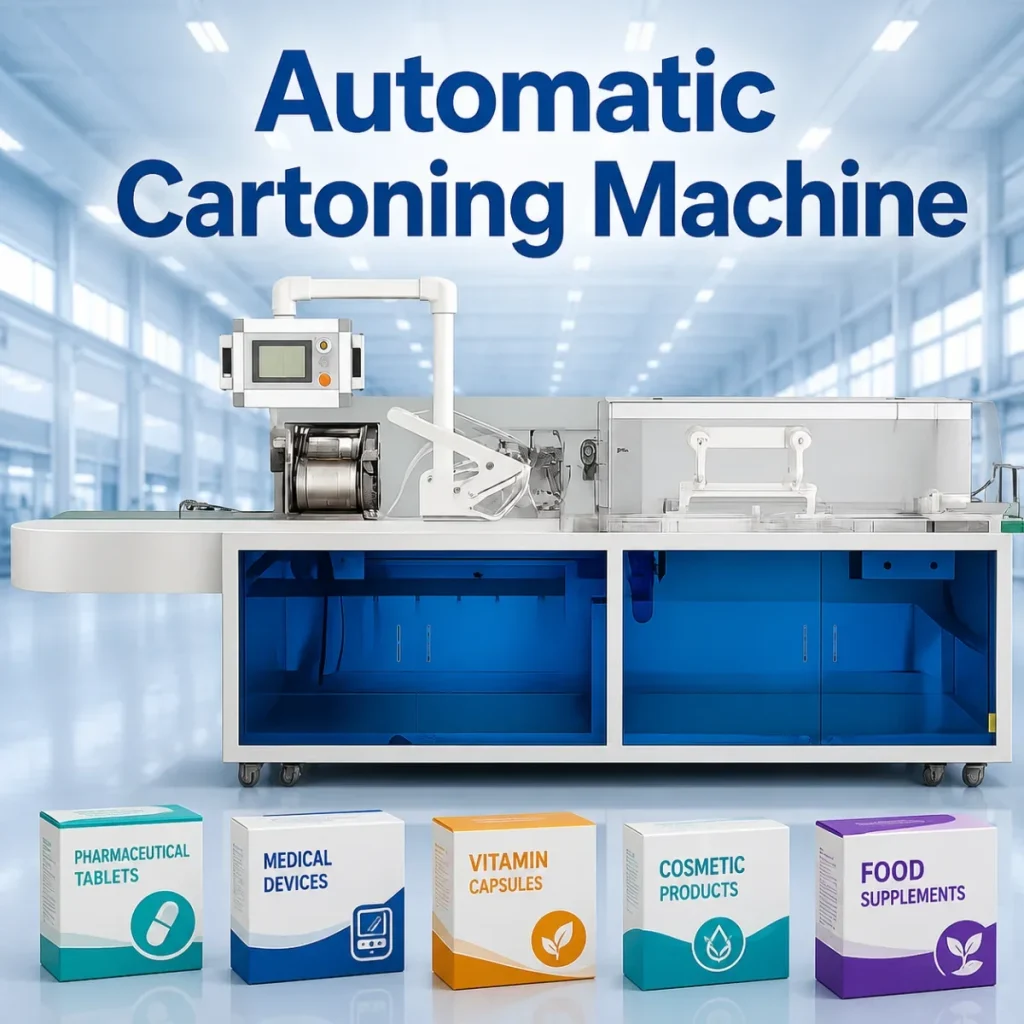
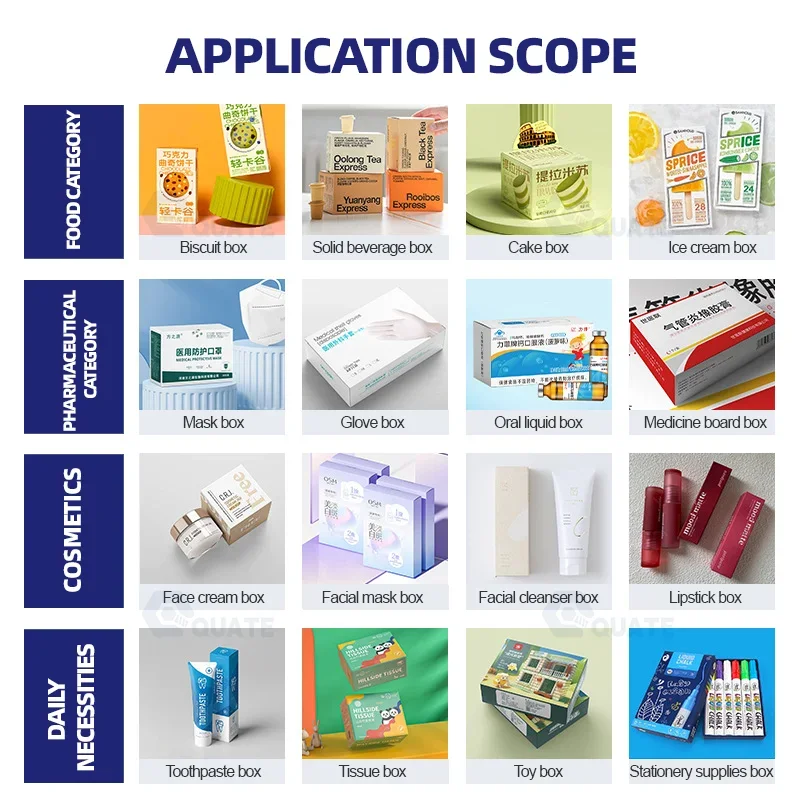
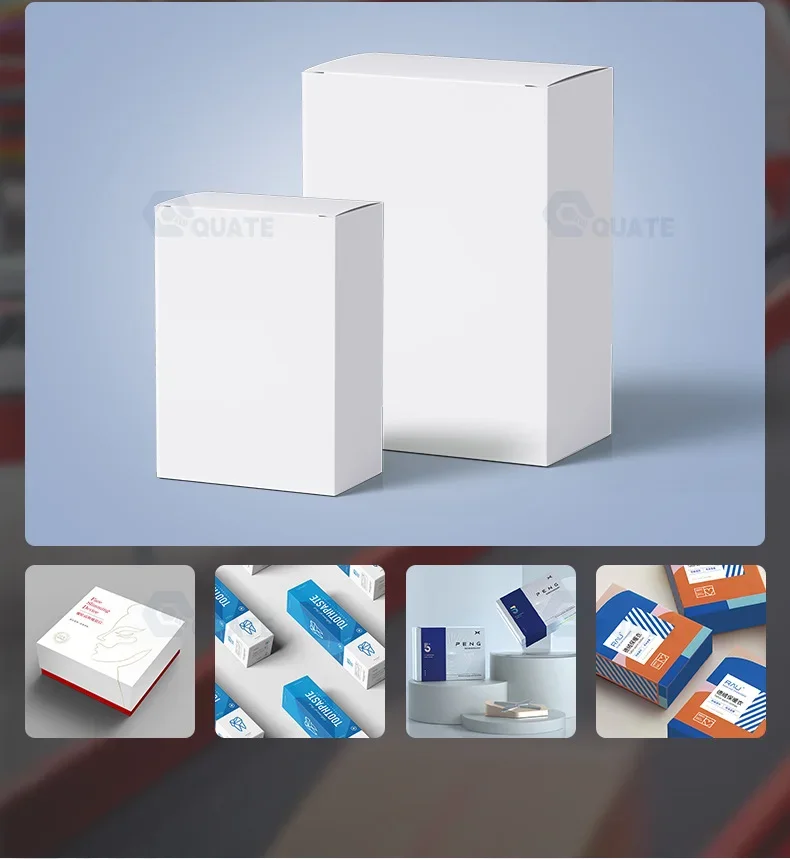
This automatic horizontal cartoning machine erects folding cartons, inserts products, closes the carton flaps, and discharges the finished boxes in a continuous cycle. It is suitable for regularly shaped products used in food, cosmetics, healthcare supplies, daily necessities, toys, and stationery. Different feeding systems can be configured according to the product, helping manufacturers reduce manual cartoning work and connect the machine with upstream and downstream packaging equipment.
Product Overview
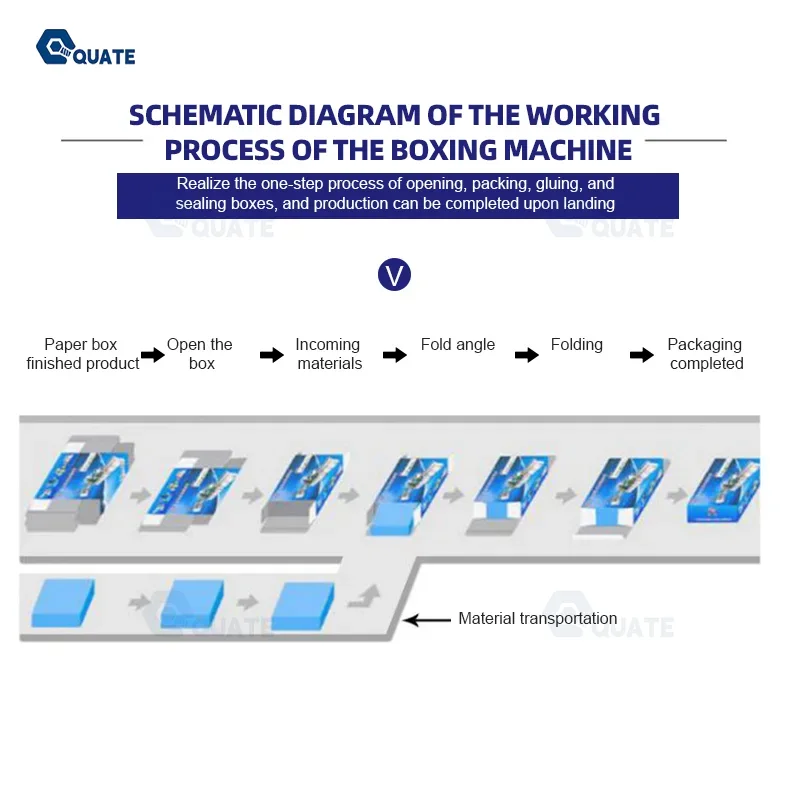
This automatic horizontal cartoning machine is designed to pack individual products or grouped items into pre-glued folding cartons. Its main operating stages include product conveying, carton pickup, carton erecting, product insertion, flap folding, carton closing, and finished-carton discharge.
Products are transferred to the loading position by the infeed conveyor. A photoelectric detection system confirms the presence of the product before a flat carton is taken from the carton magazine and mechanically opened. Once the product and erected carton reach the insertion station, a push mechanism places the product inside the carton. The carton then moves through the closing section, where the flaps are folded and secured according to the selected carton structure.
The machine is suitable for food manufacturers, cosmetics factories, healthcare-product packers, daily-use product manufacturers, toy factories, stationery suppliers, and contract packaging companies. A product-specific feeding and insertion system can be designed when the product shape, loading direction, or grouping method differs from the documented configuration.
The cartoner can also connect with filling machines, wrapping machines, labeling machines, coding equipment, weighing systems, and other packaging-line equipment.
Applications
This machine is suitable for regularly shaped products that can be conveyed, aligned, and inserted into folding cartons. The product dimensions, carton structure, loading direction, carton stiffness, and feeding method must be evaluated before confirming the final configuration.
This machine is suitable for:
- Biscuit cartons
- Solid beverage cartons
- Cake cartons
- Ice cream cartons
- Face mask cartons
- Protective glove cartons
- Oral liquid cartons
- Blister card cartons
- Face cream cartons
- Facial mask cartons
- Facial cleanser cartons
- Lipstick cartons
- Toothpaste cartons
- Tissue cartons
- Toy and stationery cartons
Products with irregular shapes, unstable orientation, multiple loose parts, flexible packaging, or special inserts may require a customized feeding and cartoning system. Product and carton samples are recommended before production.
Main Features
1. Automatic Cartoning Cycle
The machine integrates product feeding, carton pickup, carton erecting, product insertion, flap folding, carton closing, and finished-carton discharge in one continuous process.
2. Product Detection Before Carton Pickup
The photoelectric tracking system detects incoming products before requesting a carton, helping reduce empty cartons when product feeding is interrupted.
3. Mechanical Carton Erecting
Flat cartons are removed from the magazine and opened through a mechanical erecting structure designed to support stable and repeatable carton formation.
4. Rear-Pull Product Insertion
The documented machine uses a rear-pull pushing structure to transfer the product into the erected carton at the synchronized insertion position.
5. Adjustable Carton Range
Different carton sizes within the confirmed range can be processed through machine adjustments, without replacing a complete forming mould for every specification.
6. PLC and HMI Control
The PLC and touch-screen interface coordinate machine movement, display operating information, and provide access to relevant production adjustments.
7. Automatic Speed and Count Display
The control system can display the current cartoning speed and completed carton count, helping operators monitor the packaging process.
8. Safety and Overload Protection
The machine includes an emergency-stop device, main-drive overload protection, product insertion monitoring, and a protective enclosure around the moving mechanisms.
9. Stainless-Steel Enclosure
The documented main enclosure uses 304 stainless steel, providing a cleaner external structure and improved separation between operators and moving parts.
10. Optional Hot-Melt Glue Closure
A hot-melt glue unit can be configured when the selected carton requires adhesive sealing rather than, or in addition to, mechanical tuck-in closure.
Working Principle
Products are first placed on or transferred to the infeed conveyor. The product detection sensor confirms that an item has reached the cartoning position. The machine then removes one flat carton from the carton magazine and mechanically erects it.
The opened carton and the product move toward the insertion station in synchronization. A pushing mechanism transfers the product into the carton. After insertion, the carton continues through the closing section, where the side flaps and main flaps are folded. Depending on the selected carton structure, the carton is closed by tuck-in flaps or an optional hot-melt glue system.
The completed carton is discharged onto the outlet conveyor. It can then continue to optional coding, overwrapping, weighing, case packing, or other downstream equipment.
Process Flow:
Product Feeding → Product Detection → Carton Pickup → Carton Erecting → Product Insertion → Flap Folding → Carton Closing → Finished-Carton Discharge
The documented production sequence confirms product detection, carton opening, push-rod insertion, flap closing, and carton output.
Machine Details
1. Product Infeed Conveyor
The infeed section receives products and transports them individually toward the cartoning station. The feeding layout should be matched to the product shape and loading direction.
2. Product Detection Sensor
The photoelectric sensor detects whether a product has arrived before the carton pickup cycle begins, helping prevent unnecessary empty-carton production.
3. Carton Magazine
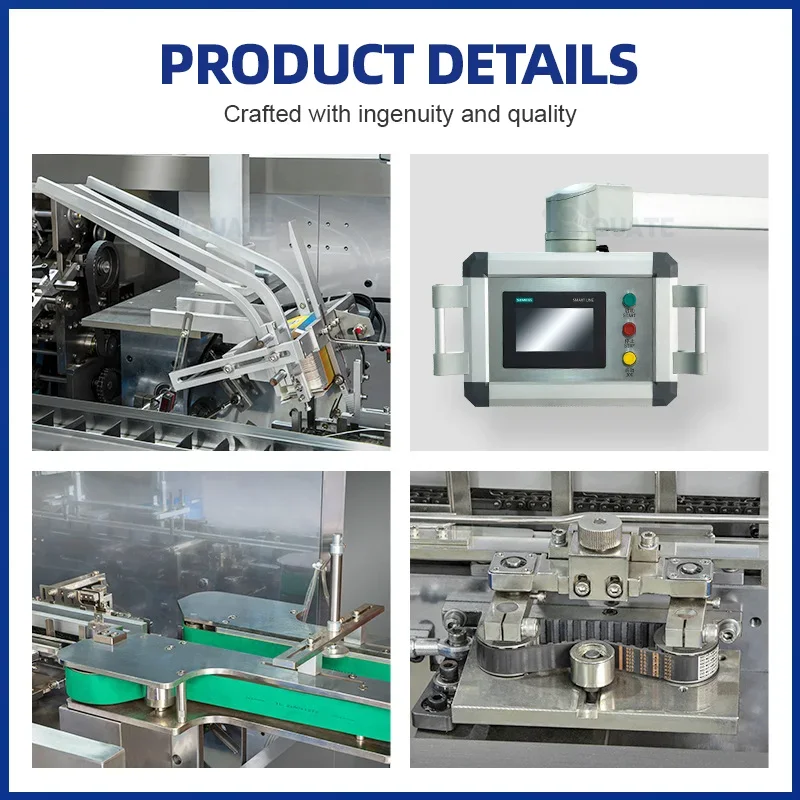
The magazine stores flat, pre-glued cartons and supplies them individually to the carton pickup and opening mechanism.
4. Carton Erecting Mechanism
The erecting mechanism removes a flat carton from the magazine and opens it into the required three-dimensional shape before product insertion.
5. Product Push Mechanism
The pusher transfers the product from the feeding position into the opened carton while the carton and product are correctly aligned.
6. Carton Closing Section
The closing section folds the carton flaps and completes the selected mechanical tuck closure. Adhesive sealing requires the corresponding optional glue configuration.
7. PLC and Touch-Screen Interface
The control system coordinates the operating sequence and gives the operator access to machine settings, speed information, counts, and operating status.
8. Transparent Safety Guard
The protective enclosure separates the operator from the main cartoning mechanisms while allowing the carton opening, insertion, and closing process to be observed.
9. Finished-Carton Outlet
The outlet conveyor transfers completed cartons away from the closing station for inspection or connection with coding and secondary packaging equipment.
The machine configuration diagram identifies the product conveyor, HMI, carton magazine, pushing mechanism, closing mechanism, and finished-carton outlet as the main operating sections.
Technical Parameters
| Parameter | Specification |
|---|---|
| Model | TYZ-120 |
| Documented Product Format | 69 × 69 mm card pack; double-tuck carton |
| Cartoning Speed | 60–80 cartons/min |
| Carton Paper Requirement | 250–400 g/m²; flat surface suitable for vacuum pickup |
| Carton Size Range | 70 × 70 × 14 mm to 150 × 95 × 50 mm |
| Compressed Air Pressure | ≥0.6 MPa |
| Air Consumption | 20 m³/h |
| Power Supply / Main Motor Power | 220–380 V, 50 Hz / 1.5 kW |
| Machine Dimensions | 3800 × 1200 × 1700 mm |
| Net Weight | 1200 kg |
Packaging & Shipping
The supplied document does not confirm the export packing dimensions, gross weight, number of wooden cases, or international shipping terms for the standalone cartoning machine. These details should be confirmed after the product feeder, carton-closing method, voltage, safety enclosure, and optional equipment are finalized.
Before shipment, the product feeding system, carton magazine, carton erecting mechanism, product pusher, closing section, sensors, control system, and safety devices should be checked against the confirmed configuration. Testing with the customer’s actual product and cartons is recommended.
The documented supply list includes the cartoning machine, basic maintenance tools, spare vacuum cups, conveyor-chain components, an oil gun, and an operating manual.
The final packing method, shipping dimensions, and gross weight will be confirmed according to the selected machine configuration.
FAQ
Q1: What products can this cartoning machine pack?
The machine can pack regularly shaped food products, cosmetics, healthcare supplies, personal-care products, toys, stationery, card packs, and similar items into folding cartons. The final feeding and insertion structure must be matched to the product dimensions, shape, orientation, and loading method.
Q2: What carton sizes can the machine handle?
The documented carton range is from 70 × 70 × 14 mm to 150 × 95 × 50 mm. These dimensions apply to the supplied configuration. Cartons outside this range require a separate engineering review and cannot be assumed compatible without confirmation.
Q3: What carton material is required?
The specification lists carton paper of 250–400 g/m². The carton surface must remain flat and suitable for vacuum pickup. Carton stiffness, creasing quality, glue position, tuck-flap structure, and dimensional consistency all affect carton opening and closing performance.
Q4: Can the machine connect with other packaging equipment?
The machine can be integrated with compatible filling, wrapping, labeling, coding, weighing, inspection, and secondary packaging equipment. The connection height, speed, product spacing, communication signals, and production sequence must be confirmed during line design.
Q5: What information is needed before ordering?
Please provide the product dimensions, weight, photos or samples, carton drawings, flat-carton samples, carton material, closure structure, loading direction, required speed, local voltage, compressed-air supply, and details of any upstream or downstream equipment.
Send Inquiry
Share your product, material, bag size and capacity requirements. RafaelaPack will prepare a suitable packaging machine recommendation.