Blog
Tea Packaging Machine Buying Guide for Tea Producers
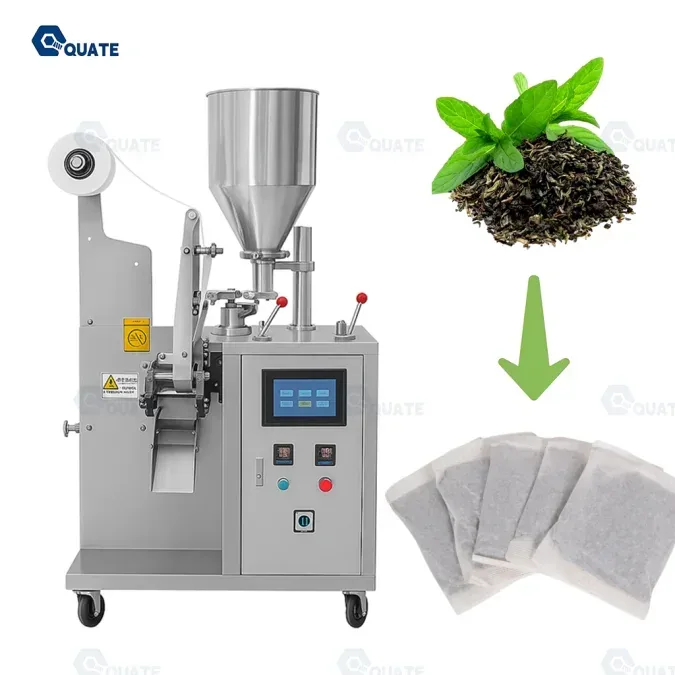
A tea packaging machine must match the tea characteristics, bag style, target output, packaging material, automation level, and factory conditions. This guide helps tea producers compare suitable machine configurations, avoid mismatched packaging formats, prepare for sample testing, and provide the right technical information before requesting a quotation.
Introduction
Choosing a tea packaging machine is not simply a matter of comparing machine size or automation level. The correct configuration depends first on what kind of tea you are packing, how the final package should look, what packaging material will be used, and how the machine needs to fit into your production process.
Loose leaf tea, broken tea, fine tea particles, and blended herbal materials can behave differently during feeding and dosing. At the same time, a conventional filter-paper tea bag, a pyramid bag, an inner bag with an outer envelope, and a larger retail pouch require different packaging structures.
For this reason, tea producers should define the finished product before selecting equipment. This guide explains the main factors to consider, the common machine configurations available, and the technical information a supplier needs before recommending a suitable solution.
Key Considerations When Choosing a Tea Packaging Machine
1. Start With the Tea You Need to Pack
The first question should be: What material will actually enter the machine?
Tea products can vary significantly in particle size, shape, flowability, and consistency. Fine broken tea generally behaves differently from long loose leaves. Blended products may also contain ingredients with different sizes or densities.
These characteristics matter because the feeding and dosing system must deliver the material consistently without causing unnecessary blockage, bridging, or product damage.
Before selecting a machine, prepare basic information such as:
- Type of tea or blended material
- Approximate particle size
- Whether the tea contains long leaves or fine particles
- Whether the material produces noticeable dust
- Desired filling weight per package
- Photos, videos, or physical samples when possible
For unusual tea blends, testing the actual material is more useful than choosing equipment only from a catalog description.
2. Confirm the Final Tea Bag or Package Format
The final package has a major influence on machine selection.
A buyer looking for a simple filter-paper tea bag does not necessarily need the same machine as a producer making pyramid tea bags or individually wrapped tea sachets.
Common tea packaging formats may include:
- Flat filter-paper tea bags
- Tea bags with string and tag
- Inner tea bags with individual outer envelopes
- Pyramid or triangular tea bags
- Small pillow-style sachets
- Larger retail pouches for loose tea
The machine must be selected according to the required finished package rather than using the general term “tea packing machine” alone.
Before requesting a quotation, confirm the intended bag shape, approximate bag dimensions, filling weight, and whether additional elements such as string, tag, or outer wrapping are required.
3. Match the Packaging Material to the Machine
Packaging film and filter materials are part of the packaging system, not an afterthought.
Different tea bags may use different materials and sealing methods. The machine structure, sealing system, film feeding arrangement, and bag-forming components must be compatible with the selected material.
Buyers should confirm:
- Packaging material type
- Material width
- Roll dimensions if roll-fed material is used
- Printed or unprinted material
- Required sealing method
- Whether registration marks are used for printed film
If packaging material has already been selected by your brand or customer, provide a sample to the equipment supplier before machine production.
This helps prevent a situation where the machine is completed but the planned packaging material cannot run reliably on the selected configuration.
4. Define Your Required Production Capacity
Production capacity should reflect the real production plan rather than simply choosing the fastest machine available.
Consider:
- Daily or shift production requirement
- Number of working hours
- Number of product varieties
- Frequency of product changeovers
- Filling weight
- Bag size
- Required secondary packaging
- Whether operators will manually feed or collect products
The practical output of a packaging line can be influenced by product characteristics, package size, film properties, feeding stability, and upstream or downstream processes.
For this reason, capacity should be discussed together with the actual tea and package rather than as an isolated number.
5. Consider Automation Beyond the Main Packing Machine
A tea packaging line may involve more than one operation.
Depending on the final product, the production process may include:
- Tea feeding
- Dosing
- Bag forming
- Filling
- Sealing
- Cutting
- String and tag handling
- Outer bag packaging
- Date or batch coding
- Finished product conveying
- Counting or collection
- Secondary carton packing
Not every factory needs all of these functions.
A smaller producer may prefer a compact standalone system, while a factory with higher production requirements may need several processes connected into a continuous line.
The important point is to identify which steps must be automatic and which can remain manual.
6. Check Factory Conditions Before Ordering
Even a correctly selected machine can create installation problems if factory conditions are ignored.
Before confirming the equipment, check:
- Available installation area
- Ceiling height
- Electrical supply and voltage
- Operator working space
- Material loading access
- Finished product collection area
- Cleaning access
- Position of upstream and downstream equipment
If the tea packaging machine needs to connect with conveyors, weighing systems, cartoning equipment, or other packaging machines, share a factory layout or simple dimensioned drawing with the supplier.
This allows the complete workflow to be considered before the equipment arrives.
Recommended Tea Packaging Machine Solutions
There is no single tea packaging configuration suitable for every tea product. The most practical solution depends on the finished package.
For Conventional Filter-Paper Tea Bags
A dedicated tea bag packing system is generally the appropriate direction when the final product is a small filter-paper bag.
If the product also requires a string and tag, these functions must be specified when selecting the machine because they affect the packaging mechanism.
If individual outer wrapping is required, confirm whether it is completed by the same system or by an additional packaging section.
For Pyramid Tea Bags
Pyramid or triangular tea bags require a packaging system designed for that specific bag structure and compatible packaging material.
Buyers should provide the desired bag dimensions, packaging material information, filling weight, and tea sample before configuration is confirmed.
Longer tea leaves can make sample testing particularly useful because the material must move through the dosing and filling system without excessive interference.
For Loose Tea Retail Pouches
If the final product is a larger pouch of loose tea rather than an individual brewing bag, a different packaging configuration may be more appropriate.
The machine selection then depends on the pouch style, filling weight, material characteristics, and whether the package is formed from roll film or supplied as a premade pouch.
This application should not automatically be treated as the same machine configuration used for small tea bags.
For Tea Bags With Individual Outer Packaging
When every tea bag needs its own outer envelope, the buyer should define both the inner and outer package.
Important information includes:
- Inner tea bag size
- Outer envelope size
- Tea filling weight
- String and tag requirements
- Packaging materials
- Printing requirements
These details determine whether an integrated machine or a multi-stage packaging solution is more appropriate.
When a Customized Configuration Is Necessary
Standard configurations may not be sufficient when the product involves unusual tea leaves, multiple ingredients, special packaging materials, non-standard bag dimensions, or connections with existing production equipment.
In these situations, RafaelaPack can evaluate the application based on the tea sample, target package, capacity requirement, factory conditions, and required automation process.
Providing these details before quotation makes it easier to determine the correct machine structure and optional functions.
Practical Tips Before Buying a Tea Packaging Machine
- Send real tea samples for testing when possible.
Photos help identify the product, but actual samples provide more useful information about flowability, leaf length, dust, and dosing behavior. - Confirm the finished package before discussing machine configuration.
Prepare a physical sample, drawing, or reference photo showing the exact tea bag or pouch style you want to produce. - Test the intended packaging material.
Do not assume that every filter paper, mesh material, or laminated film will behave the same way on a packaging machine. - Separate standard functions from optional functions.
Ask the supplier to clearly identify which functions are included and which require additional configuration, especially string, tag, outer wrapping, coding, conveying, or other auxiliary processes. - Prepare several products if one machine will pack multiple teas.
If you plan to run black tea, green tea, herbal blends, or other products on the same equipment, provide representative samples so the supplier can evaluate the range. - Confirm cleaning and product-change requirements.
Factories producing several tea varieties should consider how operators will access product-contact areas and remove residual material between production runs. - Share your available voltage and factory layout.
Electrical requirements and installation dimensions should be confirmed before manufacturing rather than after the equipment reaches the factory. - Discuss upstream and downstream equipment early.
If the machine will connect to feeding, conveying, cartoning, or other systems, define the complete production flow before finalizing the main packaging machine.
Conclusion
Choosing a tea packaging machine should start with the finished package you want to sell, then work backward to the tea characteristics, required output, packaging material, and factory conditions. A machine that works well for a simple filter-paper tea bag may not be the right choice for a pyramid bag, an inner-and-outer package, or a larger retail pouch.
Before ordering, confirm the sample product, bag dimensions, material structure, target capacity, voltage, and any upstream or downstream connection requirements.
RafaelaPack can use this information to recommend an appropriate configuration and arrange a sample-based technical evaluation. Clear input at the beginning reduces configuration errors and makes the quotation more useful for real production planning.
FAQ
1. What information should I provide before choosing a tea packaging machine?
Provide the tea type, filling weight, approximate particle or leaf size, required bag style, bag dimensions, packaging material, target production capacity, and factory voltage. Photos or videos are useful, but physical tea and packaging samples can provide better information for configuration evaluation. If the machine must connect with other equipment, also provide a factory layout or production flow.
2. Can one tea packaging machine pack different types of tea?
It may be possible, but suitability depends on how different the products are. Fine broken tea, long loose leaves, and blended materials can behave differently in the feeding and dosing system. If several teas will be packed on the same machine, provide representative samples of each product so the supplier can evaluate whether the same configuration can handle the required range.
3. What is the difference between a regular tea bag machine and a pyramid tea bag machine?
The two systems produce different package structures and normally use different bag-forming and sealing arrangements. A conventional filter-paper tea bag and a pyramid-shaped bag should therefore be treated as separate packaging requirements. Buyers should first confirm the desired bag format, dimensions, material, filling weight, and any string or tag requirements before selecting the machine.
4. Can a tea packaging machine add string, tag, and an outer envelope?
These functions can be available on certain tea packaging configurations, but they should not be assumed to be included on every machine. If your finished product requires string, tag, or individual outer packaging, specify these requirements before quotation. The supplier can then determine whether the functions can be integrated into one system or require additional packaging sections.
5. Is sample testing necessary before ordering?
Sample testing is especially useful when the tea has long leaves, irregular particles, mixed ingredients, unusual flow characteristics, or a special packaging format. It helps evaluate how the product feeds, doses, and enters the bag. Buyers should ideally provide both the tea sample and the intended packaging material so that the machine configuration can be assessed under more realistic conditions.